How often to clean gutters in Robertson County
Gutters catch roof runoff and carry it to downspouts, away from the fascia and foundation. When troughs pack with leaves, seed pods, and shingle grit, water has nowhere to go but over the front edge. That overflow soaks the fascia board, drips behind siding, and dumps rain along the foundation.
In Robertson County, with heavy tree canopies and sudden summer storms, a clogged run is often how fascia wood rots and crawl spaces stay damp. Most homes do well with a cleaning at least twice a year, usually after the spring seed drop and after fall leaves are down. Homes under heavy oaks or pines often need it more frequently.
Seed pods, oak tassels, and roof shingle granules
Spring and fall bring different debris to Middle Tennessee roofs. In spring, maples drop propeller seed pods, and mature oak trees drop catkins and tassels. As shingles weather through summer heat, asphalt granules wash loose and settle on the bottom of the trough.
When autumn leaves drop, they mix with the spring seeds and heavy mineral granules. This mixture forms a thick, wet sludge that mats flat against the metal. It resists drying out, stays heavy, and forms an almost watertight dam right over the downspout outlets. When water cannot drain, it sits in low spots and breeds mosquitoes right under your eaves.
Clearing packed downspout elbows and kick-outs
Scooping leaves out of the open top trough is only the first step. The most common choke points in any gutter system are the curved downspout elbows near the roofline and the kick-outs near the ground.
Twigs and stems catch on inside elbow seams. Wet debris backs up, adding heavy stress on wall brackets and causing the trough to overflow at the top.
We clear out the top openings by hand, snake and flush downspout elbows, and clear the lower kick-out sections so water actually exits. If you have ground splash blocks or drainage pipes, we make sure runoff flows freely away from the home.
Overflow above porches and entryways
When gutters overflow above porches or doors, rain pours right where people walk. That concentrated drip splashes mud against siding, stains steps, and rots porch posts.
It also leaves concrete walkways and front steps slick with moss and dark algae. Keeping the trough above your front door clear prevents rotting porch headers and keeps your entryway safe and dry during heavy storms.
Signs you can spot from the ground
- Water pouring over the gutter edge during moderate rain
- Weeds or small tree seedlings sprouting inside the trough
- A downspout opening that barely trickles while gutters stay full
- Dark mud streaks down the face of siding or fascia boards
You do not need a ladder to see when a gutter is struggling. If you spot overflow or dark staining along the eaves, debris has already dammed up the flow.
Checking hangers, pitch, and weeping seams while we clean
While cleaning the troughs by hand, we are right at the roofline and inspect the whole system up close. We check for loose spikes or screw hangers pulling out of the wood.
We also check whether water is standing in low spots due to poor pitch or sag, and look for weeping seams or failing miter corners where water drips between joints. If we spot an issue, we point it out before we leave. If you want a repair, we can look at gutter repair in Greenbrier, or if roof shingles are damaged, roof repair. The choice is always yours.
How to get your gutters cleaned
Tell us your town, the general size or story count of the house, and whether the gutters have been overflowing. Tap Call / Text at the top of the page, or send photos through the quote page. You can also send a note on Facebook Messenger for a free estimate.
We clean the runs, clear the downspouts, clean up fallen debris on the ground, and let you know if we spotted a repair that needs attention. Work carries a 1-year warranty.
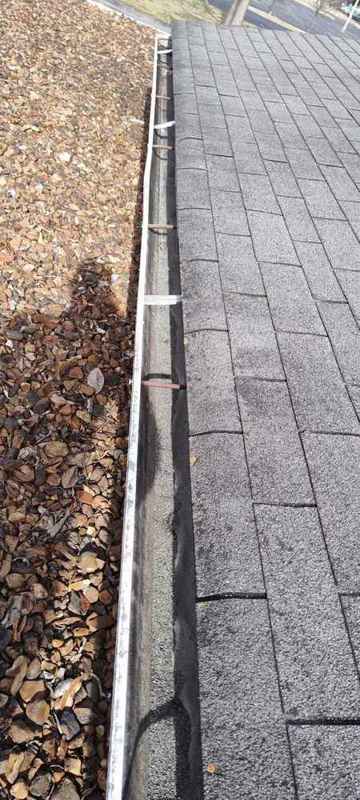
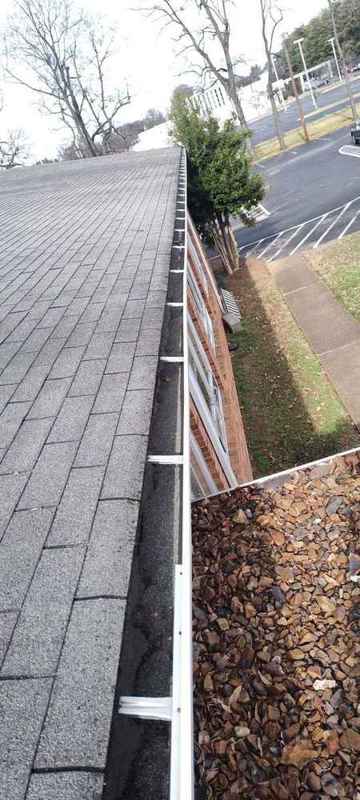
Recent gutter cleaning photos
Guides: small gutter problems in Tennessee rain and fall home maintenance checklist. Pulling loose? See gutter repair.